Pinky Retro: Your Fast Track to Authentic 60s Design
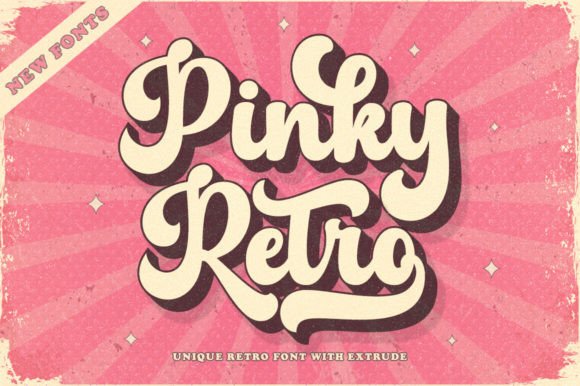
There’s a certain magnetic pull to the graphic design of the 1960s—a decade defined by bold colors, psychedelic curves, and typography that practically jumped off the page. If you’ve ever tried to recreate that vintage magic, you know the struggle: modern fonts often feel too clean, too digital, or too sterile to capture the soul of mid-century advertising. You end up spending hours adding manual shadows, outlines, and effects to get that classic extruded look, only for it to feel a bit stiff. This is exactly the problem that the Pinky Retro typeface solves. It isn't just a font; it's a time machine for your design projects, offering a bold retro script that instantly transports your work back to the golden age of advertising.
Capturing the Soul of Mid-Century Modernism
When we talk about "retro" design, we aren't just talking about making things look old. We are talking about a specific visual language that communicates warmth, nostalgia, and fun. Pinky Retro embodies this through its thick, rounded strokes and playful letterforms. But the real game-changer here is the extruded version. In traditional typography, creating a convincing 3D effect or a drop shadow on a script font is tedious work. You have to duplicate layers, offset them, and choose the right shading.
With this typeface, that heavy lifting is already done for you. The extruded style provides that immediate depth and dimension that defined the pop-art aesthetic of the 60s. It allows you to create a retro effect font appearance in seconds rather than hours. For a small business owner or a busy content creator, this efficiency is invaluable. It means you can focus on the message and the layout, rather than getting bogged down in technical layering effects. The font does the heavy lifting, giving you that professional, high-impact look that usually requires advanced software skills.
Practical Applications: Where Pinky Retro Shines
While the aesthetic is rooted in the past, the applications for Pinky Retro are incredibly modern and versatile. It functions beautifully as a display font, meaning it is designed to be used at larger sizes where its details can really shine. It is not meant for long paragraphs of body copy, but rather for headlines, logos, and focal points that demand attention.
Branding and Logo Design
For brands looking to establish an identity that feels friendly, approachable, and distinctive, this typeface is a perfect match. Think about the food and beverage industry—coffee shops, bakeries, or burger joints often rely on this vintage vibe to suggest "homemade" or "classic" quality. Using Pinky Retro for a logo instantly sets a tone of nostalgia and reliability. It tells the customer, "We care about tradition, but we have a fun personality." It works exceptionally well for beauty brands, fashion labels, and stationery shops that want a touch of whimsy in their brand identity.
Packaging and Physical Products
In the world of packaging design, shelf presence is everything. A product has roughly three seconds to catch a consumer's eye. The bold, extruded nature of this script font ensures high legibility even from a distance. Whether you are designing labels for artisanal jam, vinyl record sleeves, or makeup packaging, the typeface adds a tactile quality to the visual design. It suggests that the product inside is crafted with care and personality.
Digital Assets and Social Media
The digital landscape is noisy, and standing out on Instagram, Pinterest, or TikTok requires bold visuals. Pinky Retro is an excellent tool for creating social media graphics that stop the scroll. Because it has such a strong visual personality, it can often carry a design on its own without the need for complex illustrations. Use it for "Sale" announcements, podcast covers, YouTube thumbnails, or blog headers. It pairs exceptionally well with flat, minimalist illustration styles, creating a nice contrast between modern layout trends and vintage typography.
Strategic Typography: More Than Just Looks
Choosing a font is a strategic decision, not just an artistic one. The typography you select signals to your audience what kind of experience they are about to have. A sleek sans serif font might say "corporate and efficient," while a messy handwritten font might say "personal and casual." Pinky Retro occupies a specific niche: it signals creativity, playfulness, and a break from the mundane.
If you are a creative entrepreneur or a marketer, using this typeface can significantly improve audience engagement. People are naturally drawn to things that feel familiar yet fresh. The 60s aesthetic has made a massive comeback in recent years, appearing in everything from major movie posters to high-fashion campaigns. By tapping into this trend, you align your brand with a visual style that is currently resonating with a wide demographic, from Gen Z to Boomers.
Mastering the Art of Font Pairing
One of the most common mistakes in design is using a display font for everything. Because Pinky Retro is a bold script font, it needs a partner to balance it out. This is where font pairing becomes crucial. To maintain readability and professional presentation, you should pair this typeface with something clean and neutral.
For example, if you use Pinky Retro for a headline on a wedding invitation, pair it with a classic, elegant serif font or a simple sans serif font for the body text details (like the time, date, and venue). This contrast creates a visual hierarchy. The display font grabs attention, and the body font delivers the information clearly. If you use two loud fonts, they fight for attention, and the design becomes chaotic. If you use a loud font and a quiet font, they sing in harmony.
Navigating Licensing and Usage
When investing in design assets like a premium font, it is vital to understand the licensing. Most professional fonts come with specific terms regarding how they can be used. Whether you are a freelancer designing a logo for a client, or a business owner creating your own merchandise, you need to ensure your license covers commercial use.
Always review the documentation included with the font files. Does the license allow for use on unlimited projects? Can you embed the font in an app or an eBook? For Pinky Retro, because it is intended for such a wide range of uses—from magazines and books to packaging and advertising—it is typically structured to support these commercial needs. However, checking the specific terms ensures you are protected and using the asset ethically. Using properly licensed commercial fonts also elevates you from a hobbyist to a professional, showing clients and customers that you respect intellectual property.
Tips for Testing and Implementation
Before you finalize a design using Pinky Retro, take the time to test it in context. Typography behaves differently on a screen than it does on paper.
- Print Proofs: If you are designing for invitations, greeting cards, or packaging, always print a test page. Check how the ink absorbs into the paper. The "extruded" effect can sometimes look muddy on low-resolution printers or uncoated paper stocks. You may need to adjust the size or contrast.
- Digital Scaling: For web design or social media, check how the font renders at different pixel sizes. Ensure the script loops remain legible on mobile screens. While it works great for large hero text, it might lose detail if used for a button label on an iPhone.
- Color Contrast: Retro fonts often look best with high-contrast color palettes—think teal and orange, or mustard yellow and deep navy. Ensure your text color stands out sharply against the background to maintain that high-energy vibe.
Ultimately, Pinky Retro