Kids 3+: The Playful Font That Brings Designs to Life
There's a certain magic in the way children write—the slightly uneven letters, the carefree loops, the genuine personality that shines through every stroke. For designers, capturing that authentic, youthful energy can transform a project from ordinary to unforgettable. Whether you're creating a birthday invitation that needs to feel celebratory, designing packaging for a children's product, or building a brand identity that resonates with families, the typography you choose sets the entire emotional tone. That's where a font like Kids 3+ enters the conversation, offering a handwritten style that feels both approachable and professionally crafted.
A Typeface That Feels Like Childhood
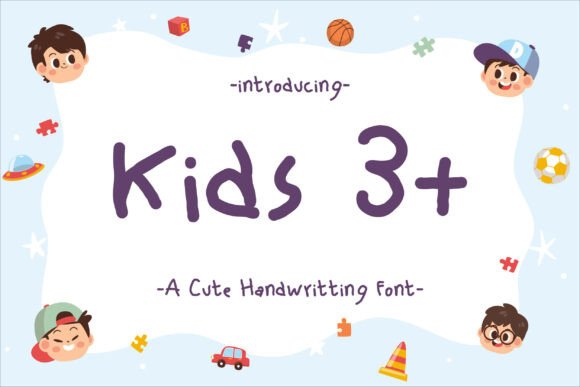
Kids 3+ is a simple children's handwriting font designed to evoke warmth, innocence, and playfulness. Unlike heavily stylized script fonts that can sacrifice readability for flair, this typeface strikes a deliberate balance. The letterforms mimic natural handwriting without becoming illegible, making it a practical choice for real-world applications where clarity matters just as much as charm.
What makes it visually appealing? The strokes have a gentle irregularity that avoids looking manufactured. Each character carries a slightly organic quality, as though a child actually wrote it with a marker or crayon. Yet the consistency across the full character set ensures that words and sentences flow together smoothly. You won't find jarring inconsistencies or awkward spacing—just a cohesive, friendly appearance that works across different sizes and formats.
The font's versatility is another standout quality. It's not locked into a single mood or aesthetic. You can use it for whimsical, lighthearted designs, but it also holds its own in more polished, professional contexts when paired thoughtfully with complementary typefaces. That adaptability makes it a valuable addition to any designer's toolkit, especially when projects call for a childlike touch without sacrificing sophistication.
Where This Font Truly Shines
Think about the projects that demand a sense of joy and approachability. Birthday invitations are an obvious starting point. The moment someone opens an invitation set in a playful handwritten font, they already feel the celebratory energy before reading a single word. Kids 3+ delivers that instant emotional connection, making it ideal for party supplies, event signage, and thank-you cards.
Packaging design is another area where this typeface excels. If you're designing labels for children's snacks, toy boxes, craft kits, or educational materials, the font communicates that the product was made with young audiences in mind. Parents browsing store shelves respond to visual cues that signal safety, fun, and trustworthiness—qualities that a well-chosen handwritten font can reinforce.
Social media graphics benefit enormously from fonts that feel human and relatable. In a feed crowded with polished corporate aesthetics, a post using a handwritten typeface stands out as genuine and approachable. Content creators, bloggers, and small business owners targeting families can use Kids 3+ for Instagram stories, Pinterest pins, Facebook posts, and YouTube thumbnails to create a consistent visual voice that audiences recognize instantly.
Logo design for child-focused brands—daycares, tutoring services, pediatric practices, kids' clothing lines, and educational apps—often calls for typography that feels welcoming rather than institutional. Kids 3+ works well as a primary logo font or as a secondary element paired with a clean sans serif or serif font. The combination creates visual hierarchy while maintaining a friendly, accessible personality.
Digital planners, printable worksheets, and educational resources represent a growing market where font choice directly impacts usability. Teachers, homeschool parents, and content creators selling digital downloads on platforms like Etsy need fonts that children can actually read and that parents find aesthetically pleasing. This typeface meets both requirements, making it suitable for activity sheets, flashcards, reward charts, and classroom materials.
Building Stronger Brand Identity Through Typography
Typography is one of the most underrated elements of brand identity. Many small business owners invest significant time in choosing colors and designing logos, then default to whatever font comes pre-installed on their computer. The result is often a brand that looks generic and forgettable.
When you select a font that aligns with your brand's personality, every piece of communication becomes more cohesive. A children's boutique using Kids 3+ across its website headers, email newsletters, product tags, and social media creates a unified visual experience. Customers begin associating that specific typographic style with the brand, which strengthens recognition and builds trust over time.
This concept extends beyond direct branding into marketing assets. Email campaigns, promotional flyers, sale banners, and digital ads all contribute to how audiences perceive a business. Using a consistent handwritten font across these touchpoints signals authenticity and attention to detail—qualities that resonate particularly well with audiences who value personal connection over corporate polish.
For entrepreneurs and freelancers working in the children's market, investing in a premium font designed specifically for this niche is a smart strategic move. It signals professionalism to clients while maintaining the playful energy that defines the industry. Whether you're a freelance graphic designer pitching to a toy company or a small business owner creating your own marketing materials, having the right typeface at your disposal streamlines your workflow and elevates your output.
Practical Tips for Using Handwritten Fonts Effectively
Choosing a font is only the first step. How you use it determines whether your design feels intentional or chaotic. Here are some grounded recommendations for getting the most out of a children's handwriting font.
Pair it wisely. A handwritten display font works best when combined with a simpler, more neutral typeface for body text. Try pairing Kids 3+ with a clean sans serif like Open Sans, Lato, or Montserrat for longer paragraphs. The contrast creates visual interest while ensuring readability. Avoid pairing two handwritten or script fonts together, as the result often looks cluttered and confusing.
Consider your size and context. Handwritten fonts tend to perform best at larger sizes—headlines, titles, short phrases, and callouts. For extended body copy, especially in small print or on screens, a simpler typeface will serve your readers better. Reserve the playful font for moments where you want to make an emotional impact.
Test before committing. Before finalizing any design, test the font at the actual size and medium where it will appear. A font that looks charming on your desktop screen might lose its character when printed at a small size on a business card. Conversely, it might feel overwhelming when blown up to poster dimensions. Always mock up real-world applications before sending files to print or publishing online.
Review the full character set. Before purchasing any font, check what's included. Does it offer uppercase and lowercase letters? Are numerals and common punctuation marks available? Does it support multiple languages if you need that functionality? Understanding the full scope of what's included prevents frustration later in a project.
Understand licensing terms. If you're using a font for commercial purposes—selling products, creating client work, or distributing materials—make sure the license covers those uses. Many premium fonts offer different licensing tiers depending on whether the font is for personal use, a single commercial project, or unlimited commercial distribution. Reading the fine print upfront saves headaches down the road.
Making Typography Work for Your Audience
Every design decision communicates something. When you choose a handwritten, childlike font for a project, you're making a deliberate statement about who the content is for and how it should feel. That intentionality is what separates professional design from amateur experimentation.
Think about your end audience. Parents browsing a website for children's clothing want to feel that the brand understands their world—playful, colorful, and full of personality. Teachers downloading classroom resources need fonts that their students can read easily. Event planners creating invitations want typography that captures the excitement of a celebration. In each case, the right font choice directly serves the audience's expectations and emotional needs.
Kids 3+ fits naturally into all of these scenarios because it was designed with that understanding at its core. It doesn't try to be everything to everyone. Instead, it serves a specific creative purpose with clarity and charm. For designers, marketers, small business owners, and hobbyists working in spaces that celebrate childhood, it's a practical, reliable tool that adds genuine personality to every project it touches.
The best typography doesn't call attention to itself—it enhances the message and connects with the viewer on an emotional level. When a font achieves that balance between visual appeal and functional clarity, it becomes more than just a design asset. It becomes a bridge between your creative vision and your audience's experience.